
The Ingram Valley Safari
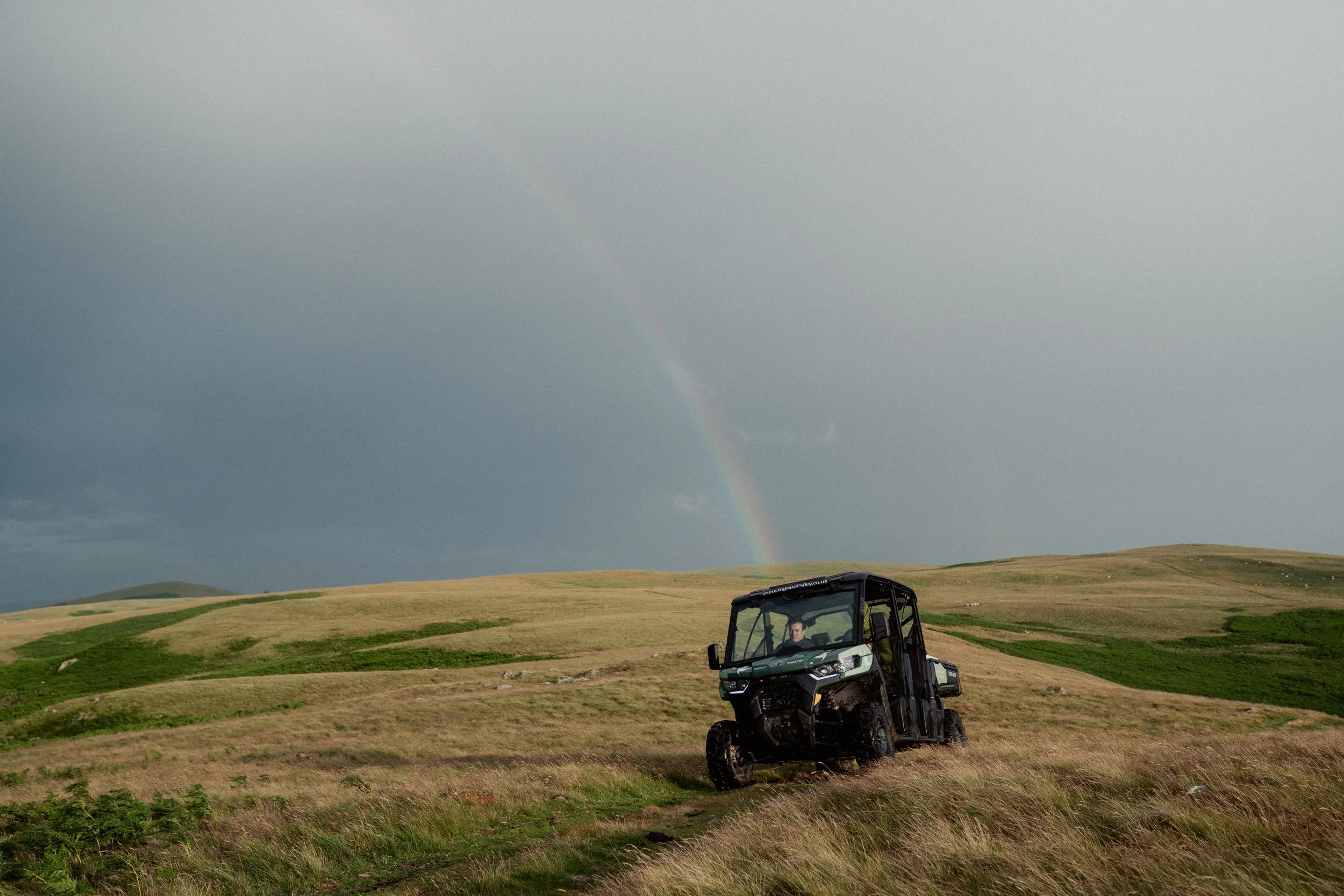
Farming in the Ingram Valley stretches back over 6,000 years. The rolling humps that comprise Northumberland’s Cheviot Hills are actually the remnants of ancient volcanoes, whose pyroclastic plumes and lava flows forged this landscape some 480 million years ago. Those eruptions left behind the carbon-rich soils that have sustained generations of farmers in the Cheviots across the millennia. In more recent times, the valley has been farmed by the Wilson family, who arrived in 1949, continuing the long tradition of stewardship over this remarkable landscape. For over 70 years, the Wilsons raised pasture-fed, outdoor-reared livestock that freely roamed these bucolic hillsides, breathing the clean upland air and drinking from the crystal-clear waters of the River Breamish. But, in 2020, following Britain’s departure from the European Union, the landscape for British farming changed dramatically. This upheaval prompted the Wilsons to innovate and diversify, seeking new ways to make the farm sustainable. Fortunately for the Wilsons, the land on which the farm resides is among the finest prehistoric landscapes in the country. In fact, over 1,300 acres of the farm are scheduled as an ancient monument, containing traces of Neolithic, Bronze and Iron Age, Roman and medieval activity. It is these layers of history that form the foundation of a truly unique Northumbrian experience – The Ingram Valley Safari. Not just a farm tour, but a journey through the ages, stretching back 12,000 years to the time when the glaciers of the last Ice Age melted away, revealing a tundra landscape teeming with deer and wild cattle.
It is approaching 7pm on a typical Northumbrian midsummer’s evening on the north-eastern fringe of the Northumberland National Park. The sun dips low in the sky, but dark clouds brood ominously over the Cheviot Hills. At Ingram Bridge car park, we meet our guide, Patrick Norris – the pioneer and driving force behind the award-winning Ingram Valley Safari experience. Patrick, a seasoned hillman with an encyclopaedic knowledge of the valley, greets us warmly and leads us to the waiting Traxter off-road vehicle. Rugged and ready for the roughest terrain, its chunky tyres gleam, stripped of their usual mud coating. The machine looks unassumingly capable and meticulously prepared for our arrival. We climb aboard, secure ourselves, and Patrick clicks the door straps shut with practiced ease. “Safety first – this is no ordinary farm tour,” he chuckles.
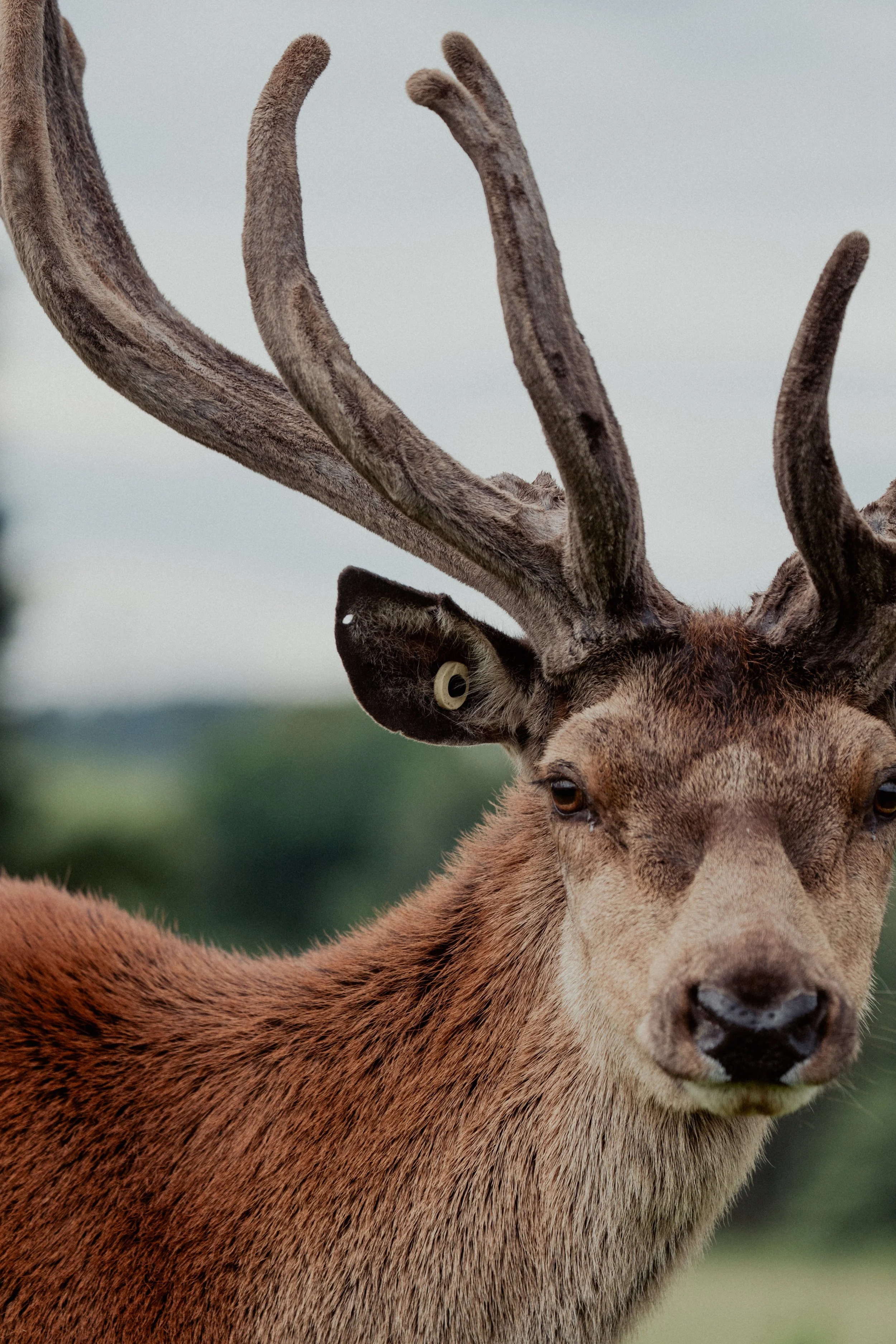
It’s not long before we leave the comfort of asphalt behind, veering left onto a steep, undulating track towards our first stop: Ingram’s red deer park. By day, the deer are usually the grand finale of the safari, but tonight Patrick has other plans. Heavy clouds gather on every horizon, yet he remains optimistic that the weather gods might grant us a break. If fortune favours, we’ll end the evening atop Cochrane Pike, watching the sun sink behind the Cheviots. A few spits of rain whip through the open cockpit of the Traxter, and with a grin Patrick reassures us: “Trust me, if you don’t like the weather up here, just wait five minutes – that usually does the trick!”As the Traxter slows, the herd comes into view, moving steadily across the pasture – their russet coats vivid against the lush summer green of the valley. Red deer were reintroduced to Ingram Farm in 2019, and today the population numbers around 120. Towering and majestic, they are Britain’s largest land mammals; in the wild, a mature stag can weigh as much as 250 kilograms! We edge closer, eyes drawn to the unmistakable star of the show: Cuthbert, Ingram’s dominant stag, his huge antlers rising like a crown above the herd. We’re surprised when Patrick cuts the engine of the Traxter, steps out of the vehicle and beckons us to follow. He explains that at this time of year, the deer are calm and untroubled, granting us the rare privilege of approaching them on foot. Their sheer size is striking up close, yet they graze with serene indifference. Come autumn, however, such proximity would be impossible. From September to November, the hills will reverberate with roars and bellows as rutting season transforms the valley into an arena of primal competition. The stags will crash antlers in fierce battles for dominance and Cuthbert will have to fight to defend his right to mate with his flock of hinds.
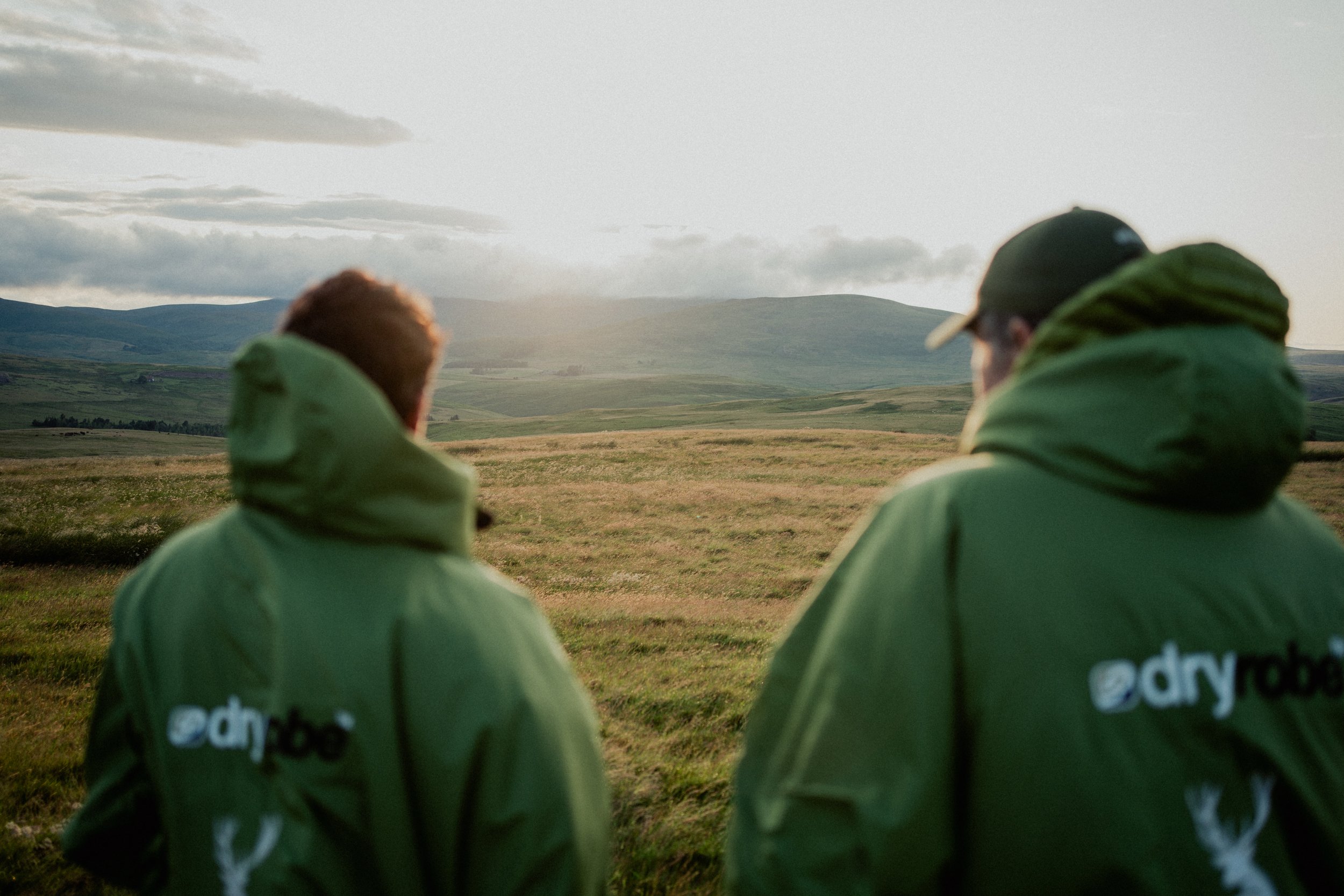
After spending time in the company of the red deer, the focus shifts to the historical thread of the safari. The Traxter growls into action, now showing its true off-road mettle as we climb higher into hills, leaving the soft pastures behind for wilder, more rugged ground. As we ascend, the clouds finally break, drenching us in sudden rain. We scramble for waterproofs and the warm DryRobes provided. “Yep, we go out in all weathers,” Patrick calls over the wind, grinning. “It guarantees an authentic Northumbrian experience!”
The vehicle halts abruptly on the edge of a ridge, and we clamber out to peer into a deep gouge slicing through the hillside. “Any guesses what shaped this?” Patrick asks with a knowing smile. Summoning half-forgotten GCSE geography, we hazard a cautious guess. To our relief, we’re right. With a glint in his eye, Patrick winds the clock back 12,000 years, sketching a vivid picture of the valley at the end of the last Ice Age, when vast glaciers finally retreated, revealing the landscape we see today, the scene for the long human history that would follow.
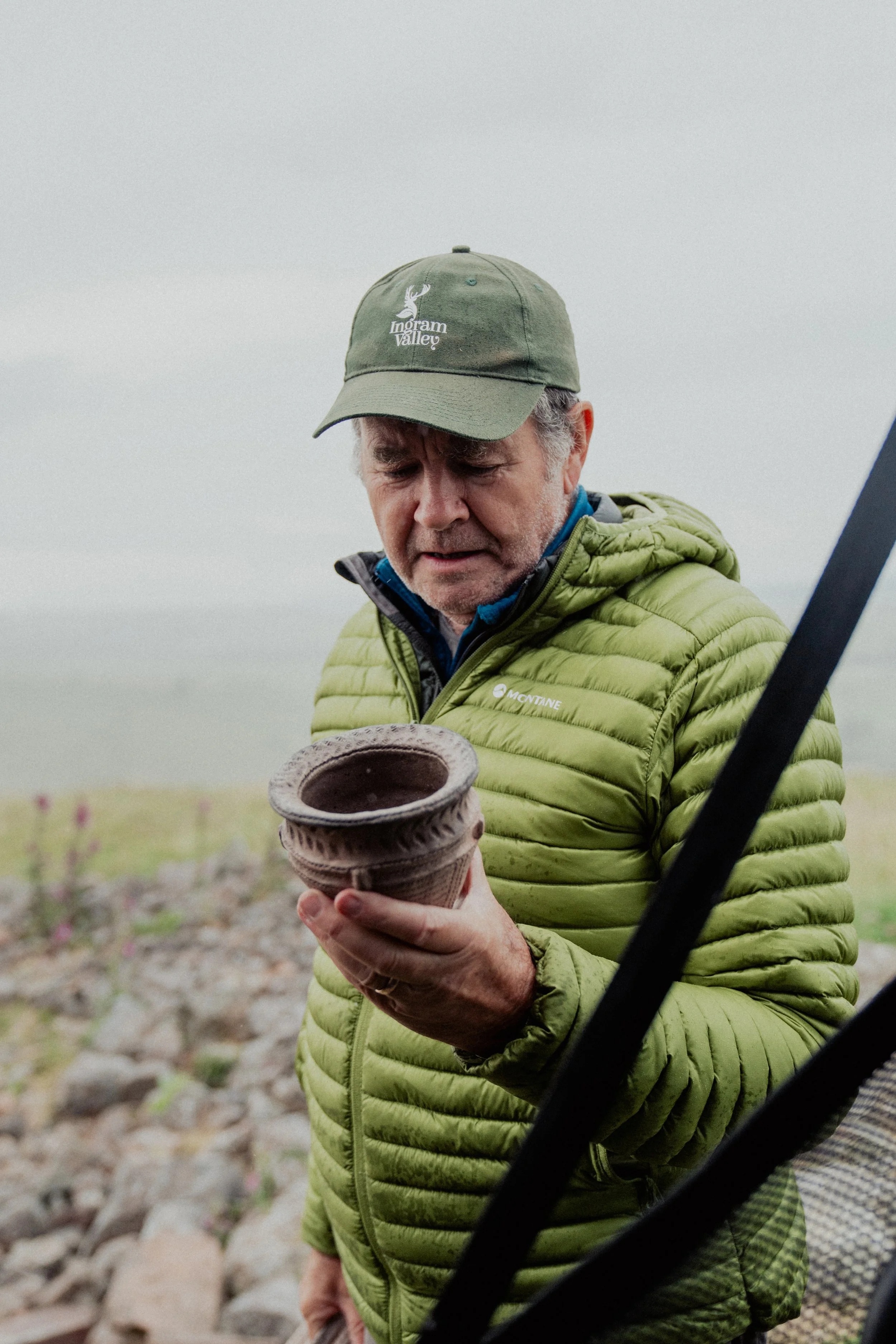
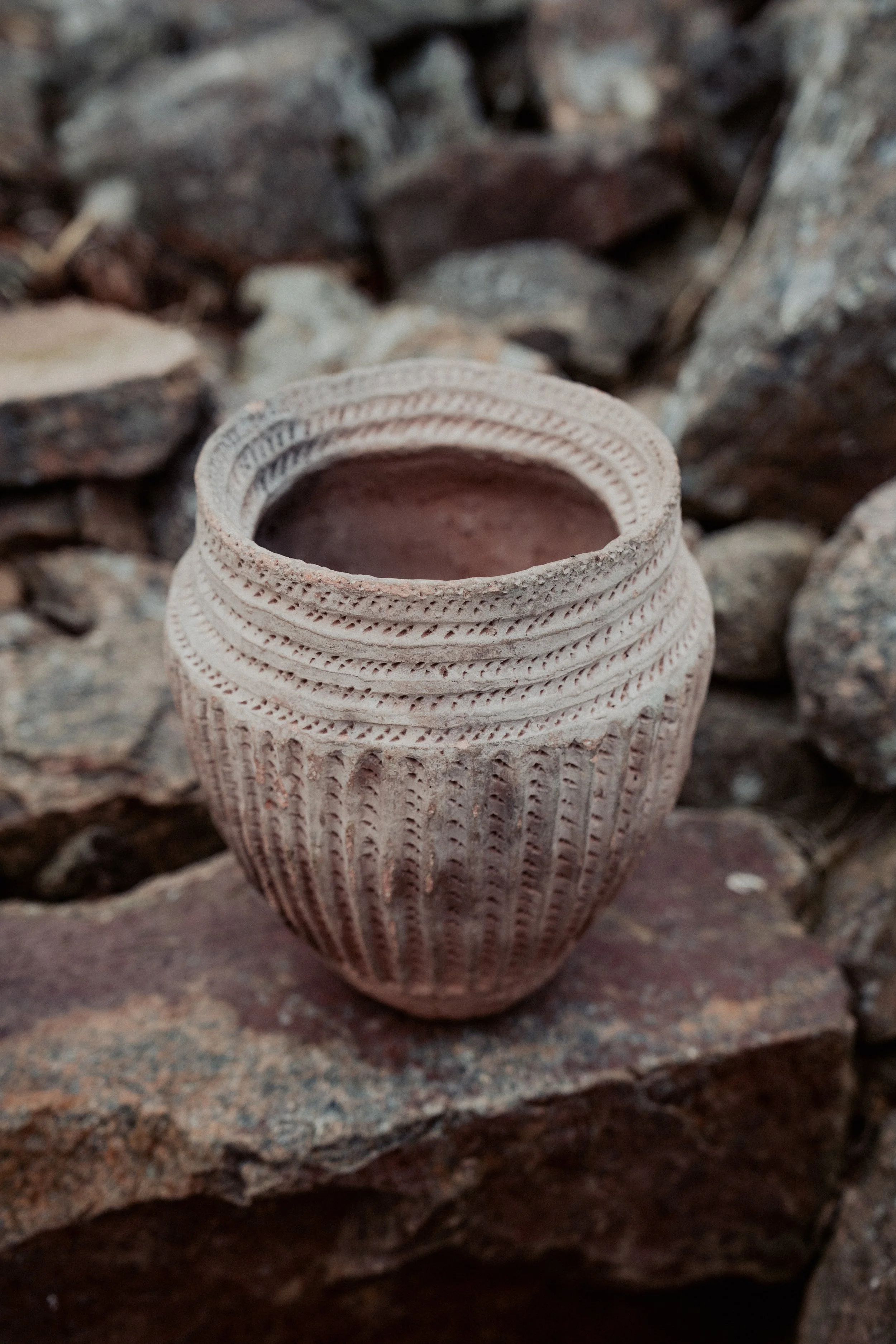
We learn that the first signs of human impact in the valley appear some 6,000 years later, during the Neolithic period. With a warming climate and fertile volcanic soils underfoot, this was the dawn of farming. Armed with polished stone axes, the first farmers cleared pockets of the dense wildwood that once cloaked the valley, sowing early crops of wheat, oats and barley. After the farmers came the cairn builders. Around 4,000 years ago, at the start of the Bronze Age, the climate was warmer than it is today, allowing people to live high on the hills. Small villages of timber roundhouses dotted the slopes, while the dead were honoured with elaborate burials. Archaeologists have uncovered stone coffins, or cists, covered with cairns of rock and often accompanied by decorated pots, perhaps filled with provisions for the afterlife. At Turf Knowe, we view an excellent example of a Bronze Age burial cairn, where a 4,000-year-old pot was unearthed during excavations. The originals are on display at the National Park Visitor Centre in the Ingram Valley, but Patrick carries handcrafted replicas for the tours. Their intricate designs reveal not a primitive civilisation, but one with remarkable skill and artistry – far removed from the ‘savages’ of popular imagination.
From there, the safari carries us into the Iron Age, a time when the valley was dominated by hill forts, strongholds that marked territory and offered protection during periods of unrest. Then came the Romans, marching north in AD 79. Their presence was felt here on the very edge of the empire, though the Cheviots remained a wild frontier, never fully subdued. In their wake, new kingdoms arose. By the early seventh century, the Kingdom of Northumbria had been founded and Christianity swept through the land. The sacred places of old were abandoned, the ancient gods set aside. People moved down from the exposed hilltops into small, low-lying villages, building rectangular timber houses clustered around simple Christian churches. Within just a few generations, the great roundhouses that had once crowned the hillsides were little more than memory.
The story then moves through the turbulence of the Border wars, when centuries of raids and reprisals scarred this frontier landscape, before carrying us forward to the present day. Here, atop Haystack Hill, the narrative comes full circle: the Wilson family are once again shaping the valley through sustainable, regenerative farming, working the land much as people have done here for millennia.
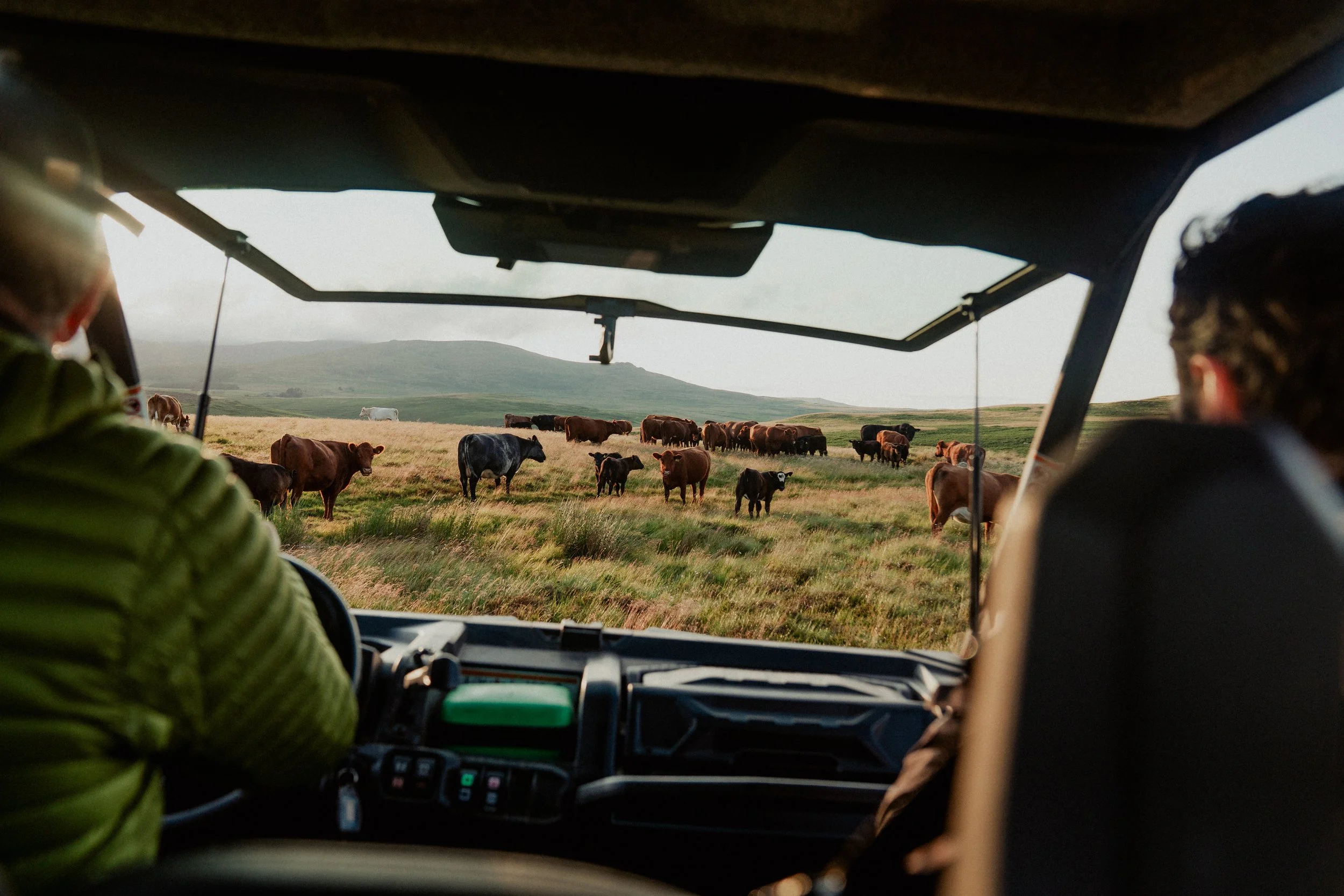
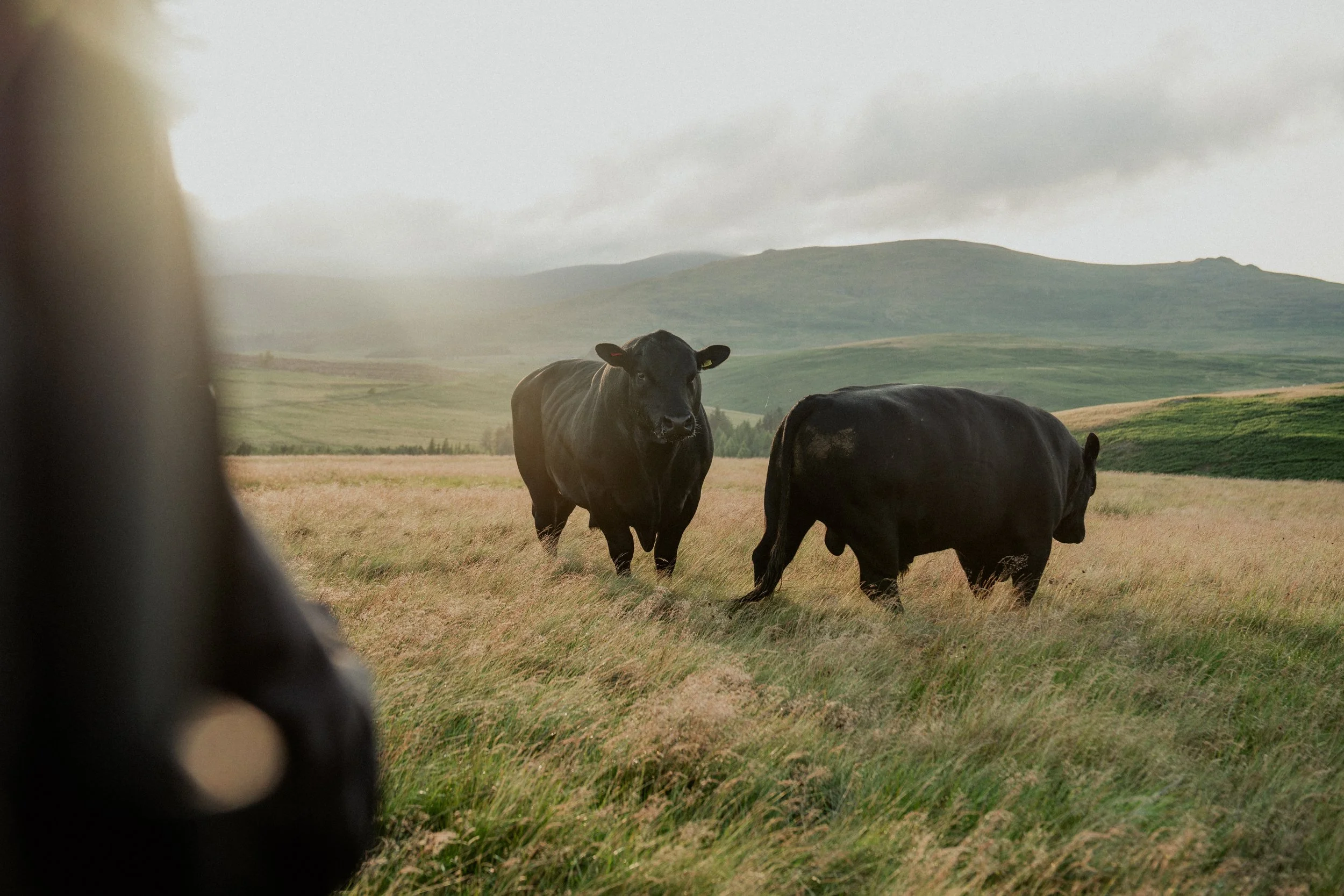
As we cruise over a flat plateau, we find ourselves shadowing a herd of free-roaming Aberdeen Angus cattle. The blood-orange sun breaks through, casting dappled golden light across the swaying grasses, a scene more reminiscent of the plains of Africa than rural Northumberland. “How about this for a safari?” beams Patrick. He’s not wrong. We reach the herd just as two Angus bulls square up, pawing the turf and testing each other’s nerve. Patrick kills the engine, and we sit in silence, breath held, watching a tonne apiece of muscle measure dominance only a few feet from our open cockpit. At last, one relents, and order ripples back through the herd. With the drama over, we bid the cattle farewell and push onwards to the summit of Cochrane Pike. At 335 metres above sea level, the reward is staggering – a sweeping 360-degree panorama, the valley spread below us, layers of history written into every ridge and rise.
It’s a stunning location, and it’s clear that Patrick is quietly chuffed with how the experience has come together. What shines through most in conversation with him is his pride in the accessibility of the safari. What might seem out of reach for some is, in fact, an adventure open to all. Every tour is tailored to the needs of the guest, and to date more than 2,000 visitors from every corner of the globe have taken part, ranging in age from seven months to 97 years. This really is an experience without barriers. As the popularity of the safaris grows year on year, the Wilsons are able to offer a wider range of experiences. From the sunset safari we have experienced, to the most popular and accessible daytime trip and now the dark sky safari where you can navigate the night sky in one of the darkest places in England.
Atop Cochrane Pike, the midsummer sun finally dips behind the Cheviots, and we reflect on what has been a remarkable evening. In just a few hours, we have traversed some of the most dramatic and historically rich landscapes in the United Kingdom, travelling back through 12,000 years of history. From the retreat of the glaciers to the rise of Iron Age hill forts, from medieval farmers to the living traditions and wildlife of today, the Ingram Valley Safari is far more than a tour, it is a rare chance to see time itself etched into the land.
As featured in This Is Northumberland 2026