
Golden eagles set to return to Northumberland after 150-year absence
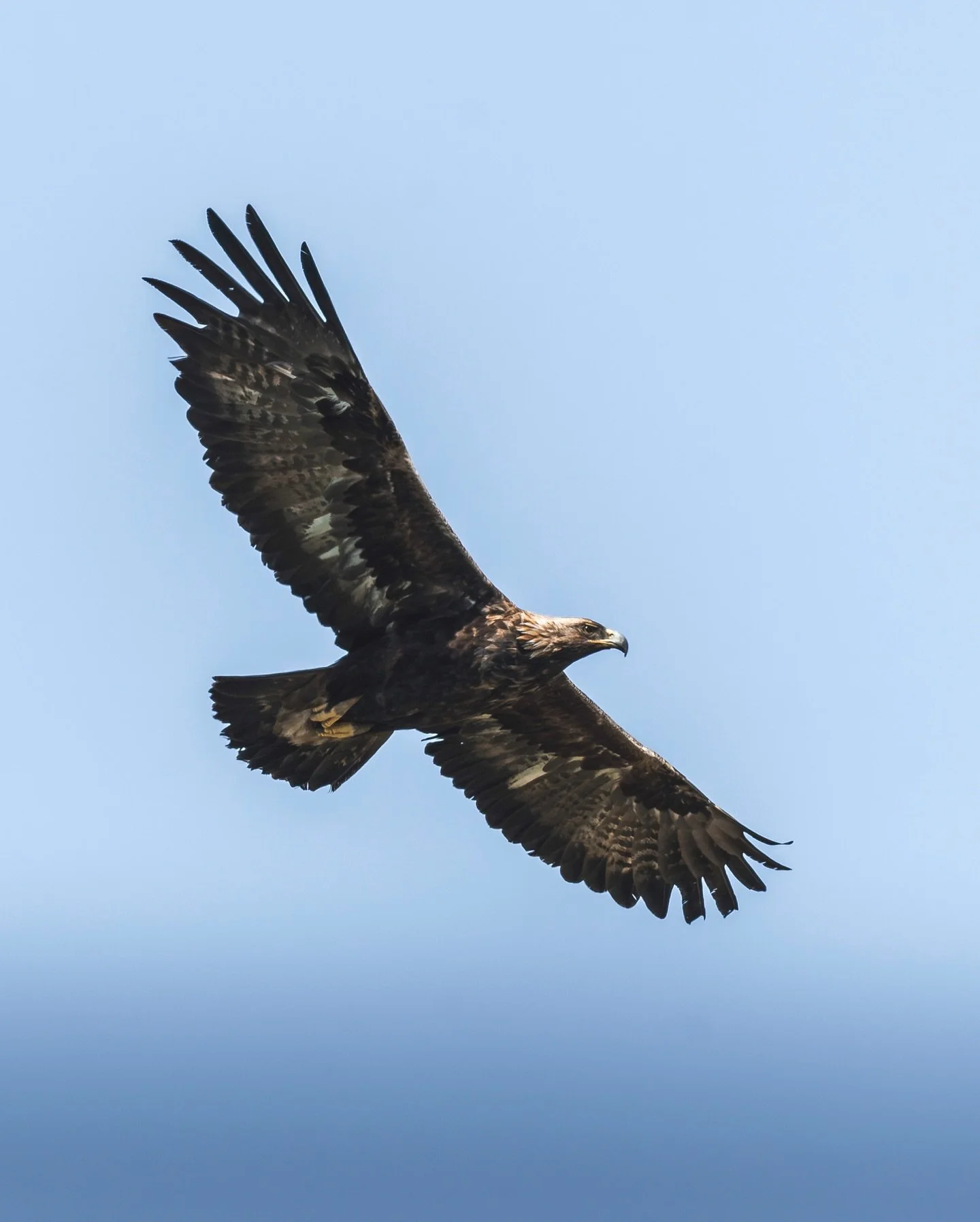
Stand on any ridge in the Northumberland uplands on a clear day and the sky above you feels enormous. Curlews wheel on the wind. The moor stretches away in every direction. It is the kind of sky that was made for an eagle. For 150 years, no golden eagle has filled it. That is about to change.
Britain's most iconic bird of prey was systematically destroyed across England during the 19th century, shot, trapped and poisoned by gamekeepers and farmers who saw it as a threat to grouse and livestock. It was hunted to extinction, and the loss was total.
But in the hills of southern Scotland, something remarkable has been happening. Over the past eight years, the charity Restoring Upland Nature has brought 28 chicks down from the Scottish Highlands and Islands and established them along the Scottish border. The project has worked beyond anyone's expectations. And now, drawn by instinct and open country, some of those birds have already begun crossing into northern England on their own, riding the same upland ridges their ancestors used for thousands of years. The recovery has started without us. The question now is whether we are ready to support it.
In April 2026, the government answered that question. Environment Secretary Emma Reynolds approved £1 million for a three-year recovery programme in England, backed by a landmark feasibility study from Forestry England that examined 28 potential locations and identified eight with the right landscape, climate and conditions. Northumberland came out as the clear favourite. The exact release site is being kept confidential to protect the birds, but chicks could arrive as early as next summer.
The golden eagle can dive at speeds of up to 200mph. Its vision is sharp enough to spot a rabbit moving three miles away. With a two-metre wingspan, it is Britain's second largest bird of prey and one of the most formidable hunters on the planet. It is also, crucially, a keystone species. As an apex predator it controls the mesopredators below it in the food chain, keeping fox and badger populations in check and creating breathing room for rarer species to recover. Ecologists call the effect a trophic cascade. The eagle's shadow, falling across a hillside, sets off a chain of ecological consequences that can restore an entire landscape. Northumberland's moorlands, its forests, its river valleys, stand to benefit in ways that go far beyond the bird itself.
The programme will not skip the hard conversations. Farming concerns are real, and research suggests golden eagles account for between 0.15% and 3% of lamb losses within their hunting range. But in Scotland, shooting estates that once opposed the project are now helping to build artificial nests. Restoring Upland Nature know that community trust is what makes reintroduction stick, and they have proved they can build it.
The golden eagle was once so woven into English culture that Shakespeare referenced it more than 40 times. To lose it entirely, through nothing more than deliberate persecution, is a wound in this country's natural heritage. To hear, one morning on a Northumberland hillside, the call of an eagle overhead, to watch it bank and climb and disappear into the cloud, would be something different altogether. With the right conditions, the right commitment and the right relationship with the people who work this land, Northumberland could be the place where England's most magnificent bird comes home for good.
Photograph by David Dinsley