Realm of the Reds
Northumberland remains one of the last strongholds of England’s native red squirrel. In this article, naturalist David Dinsley ventures deep into the county’s woodlands in search of one of Britain’s most cherished, yet most threatened, creatures.
I’m tucked away in a quiet patch of mixed woodland, where broadleaved and coniferous trees stand together. All around me, wind-strewn trunks lie idle on the forest floor. Some have snapped upright, their branches tangled and clung together, frozen in the moment the recent storm winds finally relented. Despite the visible wreckage, the woodland is calm and is full of bird song. Chaffinches, nuthatches, great tits and robins sing from all sides. A party of long-tailed tits flits through alder and elder scrub, moving through the treetop network like bouncing lollipops, their long tails and round, fluffy bodies adding to their quirky and delicate charm. Something draws my attention upward – a flash of auburn weaving through the canopy, and a sharp scrape of claws on dry bark. Then there’s a quick, whiskered glance down in my direction from a pair of curious black eyes. It’s unmistakably a red squirrel.
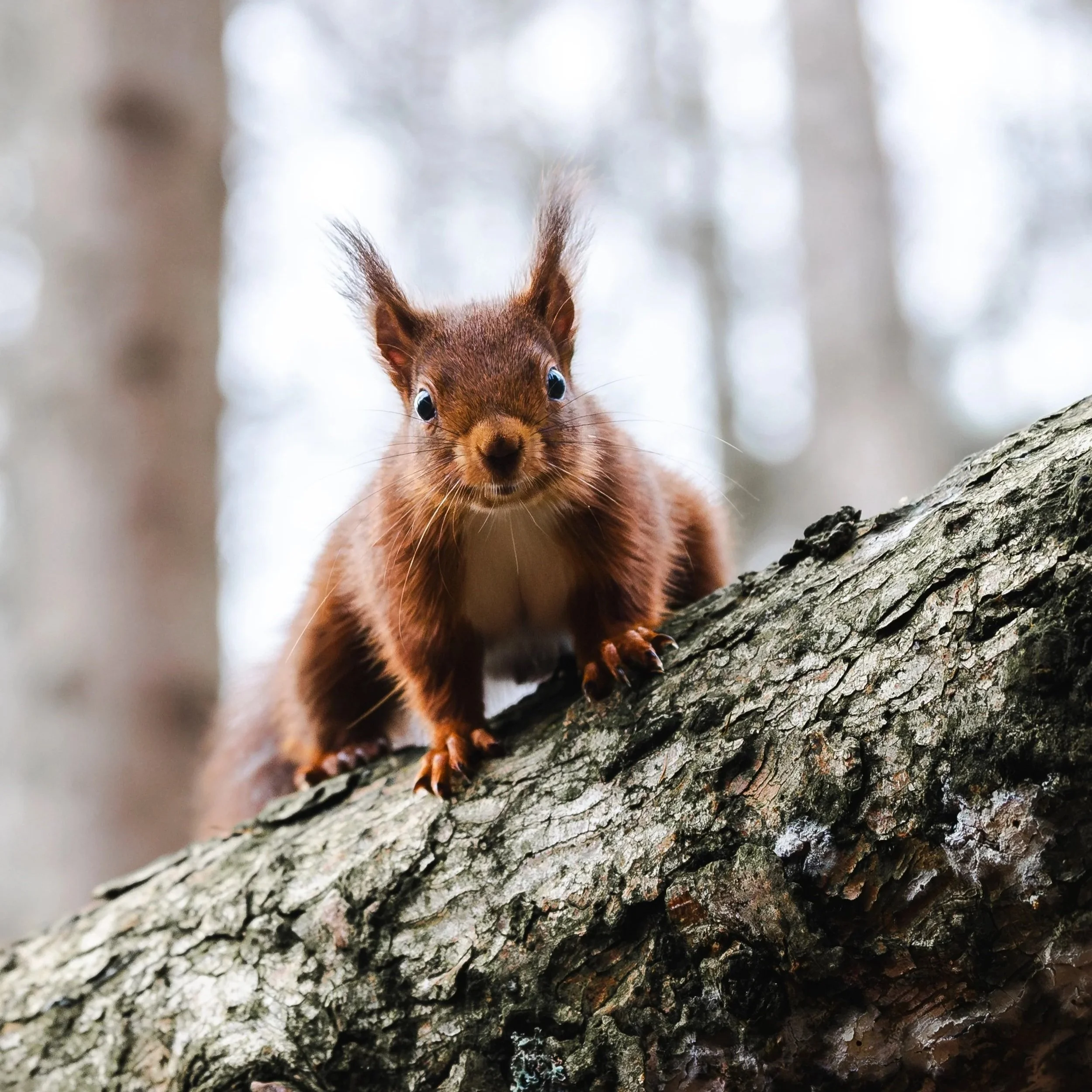
Today, Northumberland stands as one of the last strongholds for this charming arboreal rodent in England. It has long been an emblem of the region’s wild woodland spaces. I’ve found that the sighting of a red squirrel sparks the same wonder in the eyes of a child as it does in those of the old. I remember, as a young lad, with my grandad and sister for company, watching them scuttle through the bronzing autumnal canopy of Plessey Woods Country Park, nestled in the Blyth River valley. Plessey Woods was a regular fixture in my childhood and on one particular afternoon – if memory serves – we counted around 17 different squirrels. The excitement was palpable! I still feel that same quiet thrill whenever I visit these woods.
Across Northumberland, these russet phantoms can be found among the swaying pines of Kielder Forest, and the ancient broadleaves of Wallington Hall. Further north, the grounds of Cragside, with its Victorian grandeur and dark, enveloping trees, offer yet another haunt where these elusive creatures thrive. They can also be seen nearer the coast at Hauxley Nature Reserve, around the leafy pockets of East Cramlington, and in the northern border woodlands of Wooler – each a playground for their delicate leaps and flickering tails.I once encountered one in a secluded conifer plantation near the Cheviots, tucked away along the quiet banks of the Carey Burn, to be exact. It was a most unexpected and thoroughly delightful encounter.
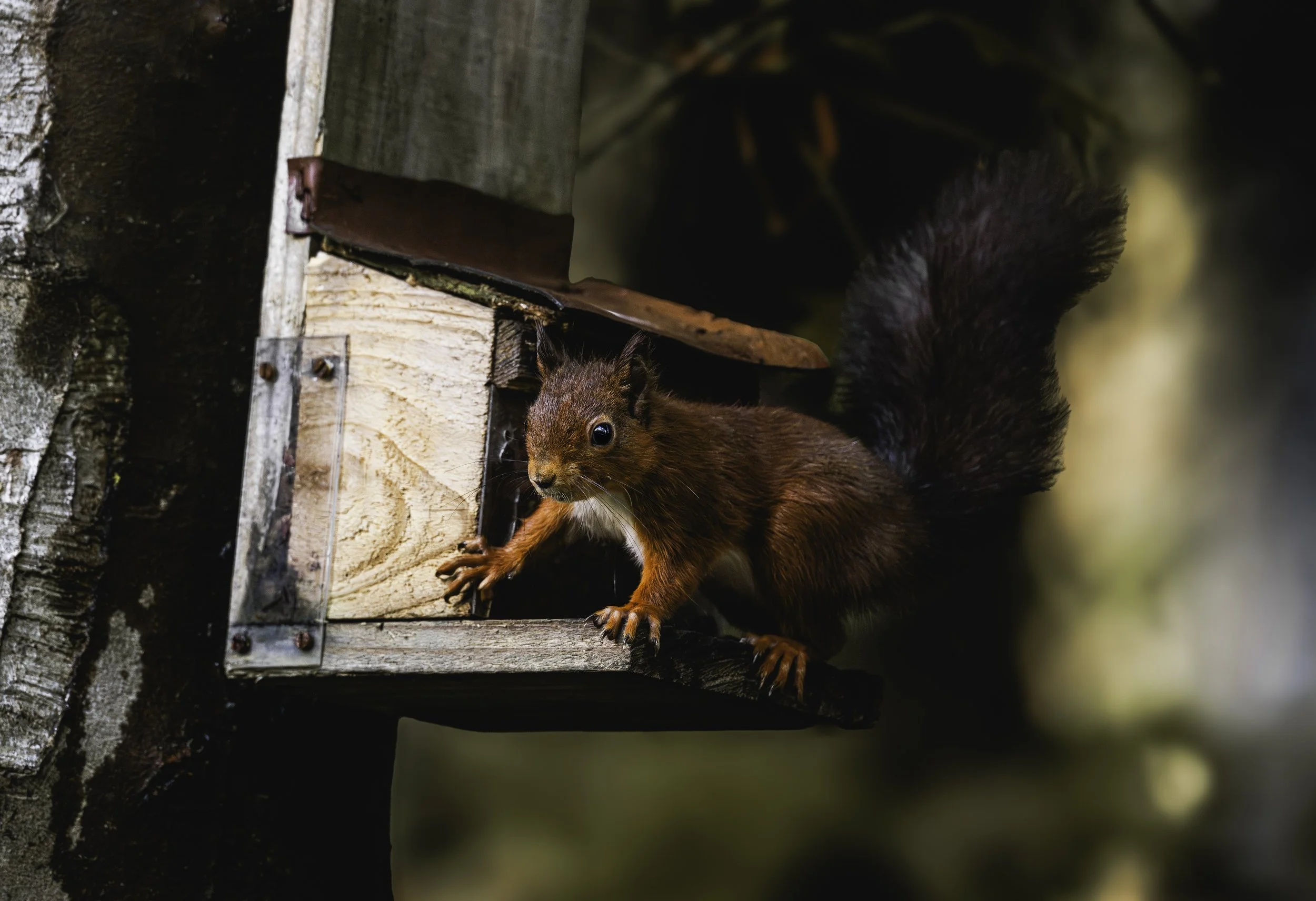
Their coats shimmer in hues ranging from deep russet to pale chestnut, glowing like autumn leaves kissed by the sun. Their bellies are white, contrasting beautifully with the rest of their autumnal coat. Long, bushy tails serve as a perfect counterbalance for mid-air jumps and wrap them in warmth when the cold winds of winter bite. Contrary to popular belief, they don’t actually hibernate, and as winter deepens, their fur thickens and softens, taking on a subtler blend of grey and muted reds – nature’s cloak to shield them from the harsh chill of the northeast’s frost. With these winter coats grows a pair of very distinctive and charming ear tufts. Agile and swift, the squirrels navigate the canopy with effortless grace, leaping between branches, pausing delicately to pry open pine cones in search of hidden seeds. Red squirrels feed on nuts, seeds and berries, and occasionally the buds of trees, storing what they can in a cache for the harsher winter months. They’ve also been known to take birds’ eggs and small invertebrates, great sources of protein.
Though a highly arboreal species, red squirrels can be seen on the ground too, usually caching their food supply for a later time. In some locations, they are also incredibly tame around people and have become confident enough to take hazelnuts right out of your hands. Though it must be said that, as fun as this is, it’s not good practice, as the squirrels can become dependent on being fed and they are often at risk of potentially being attacked by dogs – an unfortunate and unnecessary fate for the boldest of squirrels. Breeding once or twice a year, females rear litters of three to four kittens (kitts) in snug, hidden dreys, high above the woodland floor. Their success rate is closely connected to the availability of food in the forest. A drey is a secret haven, woven from twigs and leaves, and lined with mosses and grass. Cosy and hidden, it cradles new life, and acts as a soft refuge where warmth and shelter keep the squirrels safe from the elements and hungry eyes.
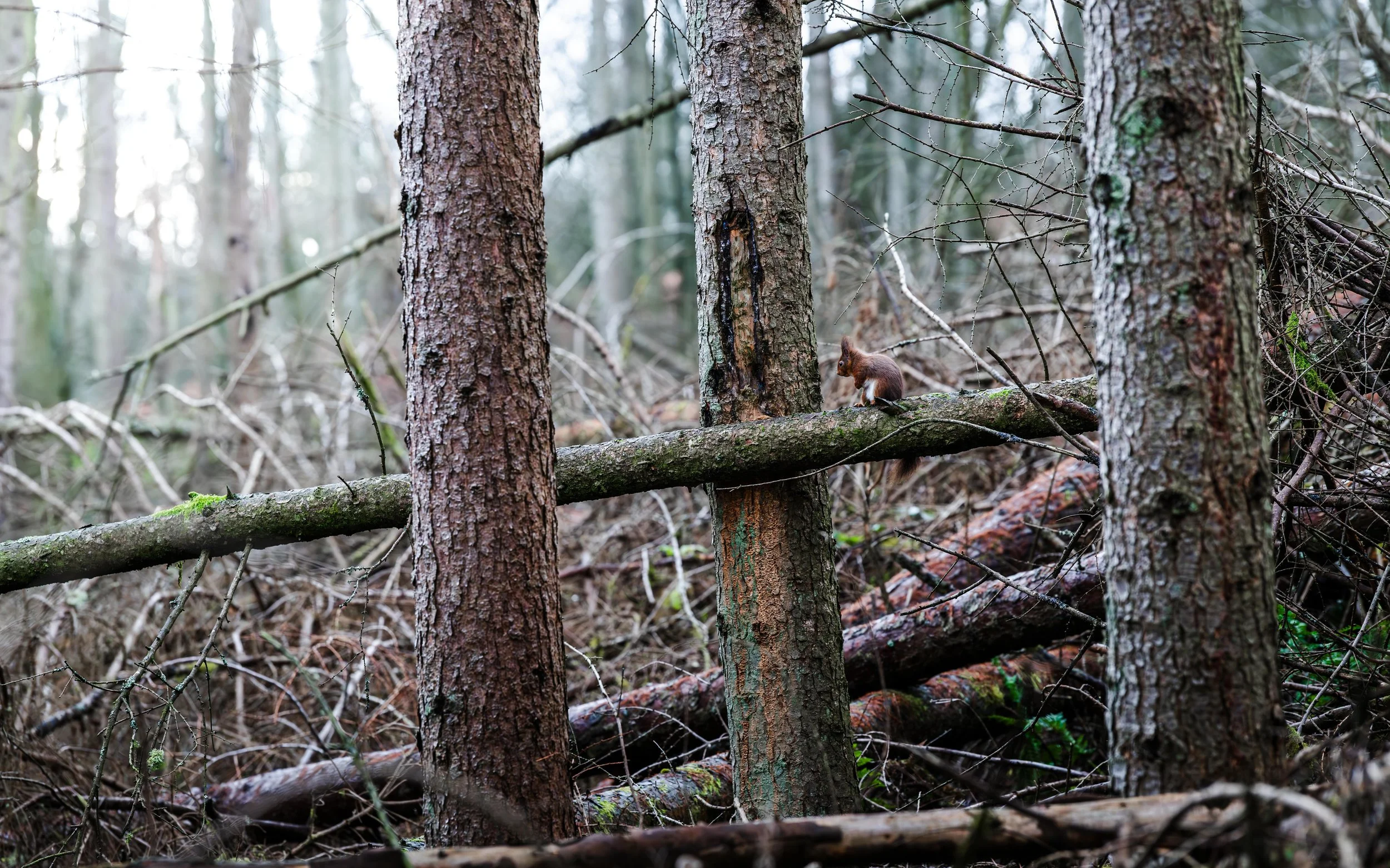
In the twilight of the Victorian age, their cousin, the grey squirrel, came to Britain – a stranger from distant, forested shores across the great Atlantic. Brought over by humans to grace the manicured lawns and quiet groves of grand estates, they were attractive additions to 19th-century green spaces. However, squirrels being squirrels, it didn’t take them long to spread out into the wider English countryside. Swift of limb and keen of wit, they roamed with the confidence of conquerors, carrying with them an unseen doom for our native reds, whose kind had long dwelled in Britain’s countryside without being obtrusive. The arrival of the larger, bolder grey squirrel shattered that delicate harmony. Cloaked in a quiet menace, the greys brought with them the squirrelpox virus, which is mostly harmless to the greys, yet often lethal to their red cousins. The reds couldn’t adapt quickly enough to live alongside this virus and the results have been catastrophic. What’s more, by their nature, grey squirrels are far more adaptable and have superior skills of foraging, thus outcompeting the smaller reds. The greys strip bark from trees, raid carefully hidden caches, and flourish in numbers the reds could never sustain. They are driving our native squirrel into ever-shrinking pockets of woody refuge in the more remote reaches of the country.
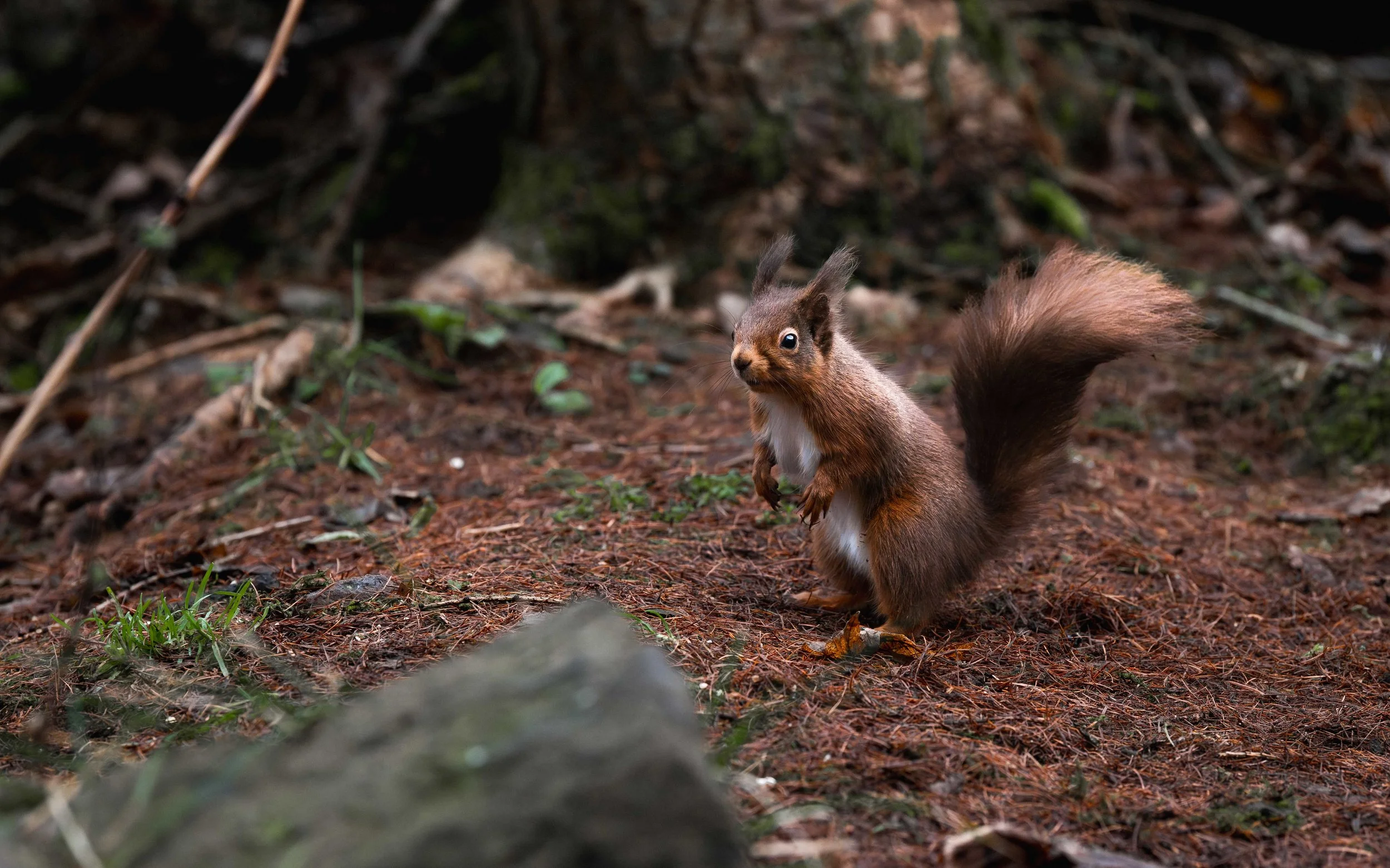
In Northumberland, the battle to protect the native red squirrel is fought with quiet determination. Grey squirrel control is a vital part of conservation efforts, aimed at safeguarding the dwindling red populations from the threats of competition and disease. It is said that pine martens – nimble, tree-dwelling mustelids akin to weasels and otters – might serve as nature’s own guardians against the grey squirrel. Since grey squirrels are stockier and spend more time on the forest floor, they are far easier prey for these stealthy hunters, unlike the smaller and more arboreal red squirrels, who navigate the branches with unmatched agility and grace. And though, inevitably, the occasional red squirrel may fall prey to a marten’s grasp, the scales of fate lean far more heavily toward a grey squirrel becoming a marten’s supper – a natural balancing of the ecosystem. A day may come when the pine marten once again claims its place amongst Northumberland’s woodland, if it hasn’t already.
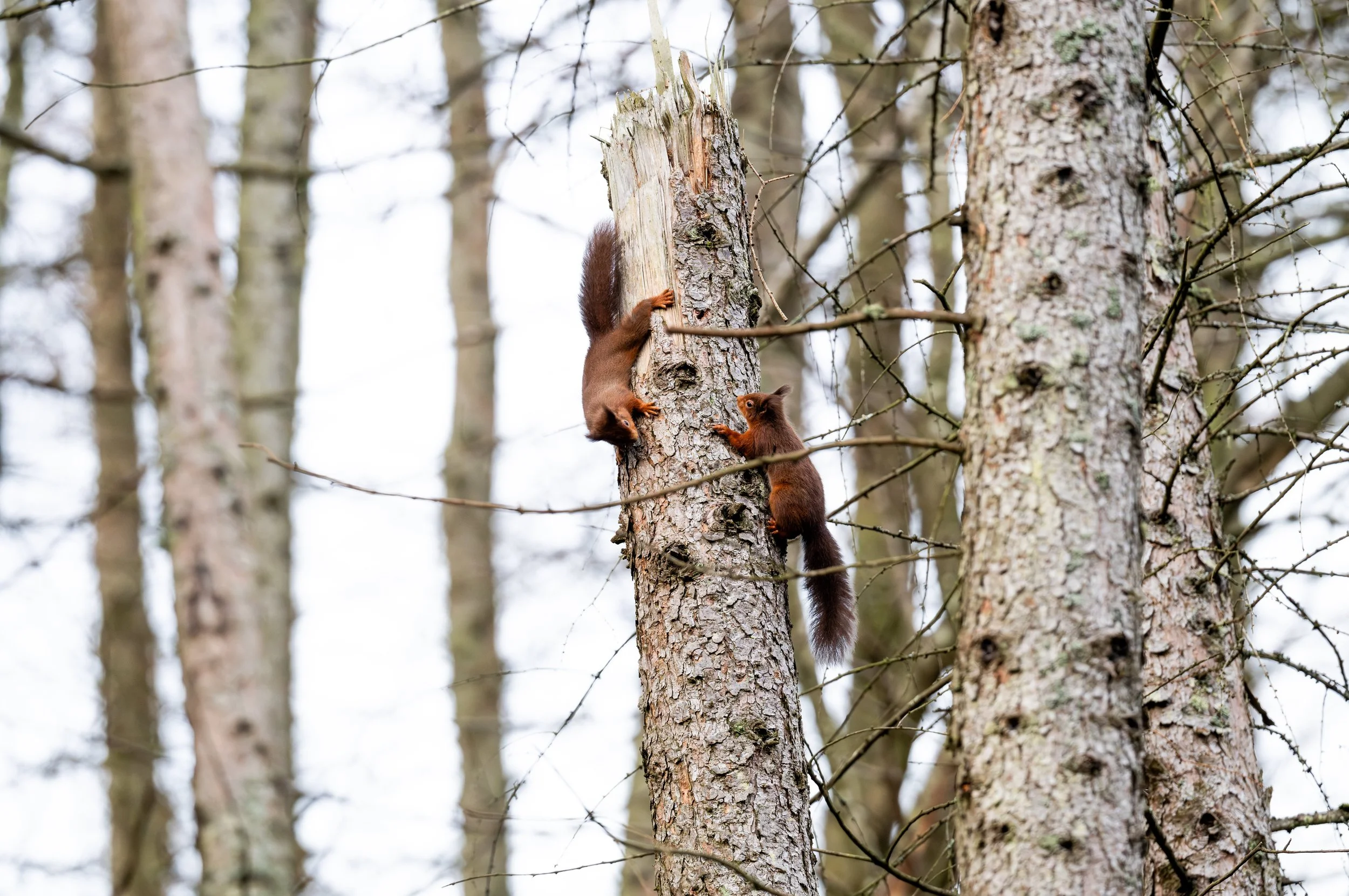
Back in my sylvan realm, I linger in quiet watchfulness as two nimble squirrels weave their merry way through the high green lattice of the canopy. The afternoon sunlight dances upon their fur as they dart from twig to twig, until at last they reach the proud pillar of a single great trunk, and with swift delight, they spiral upward and around it. For a few still moments they pause, eyes bright and tails a-quiver, caught in the stillness between moments – a fleeting truce, or perhaps just a chance to catch their breath. Then, with a sudden bound, one makes for the other. The chase is renewed, and they vanish into the deep and untamed wild beyond my sight.
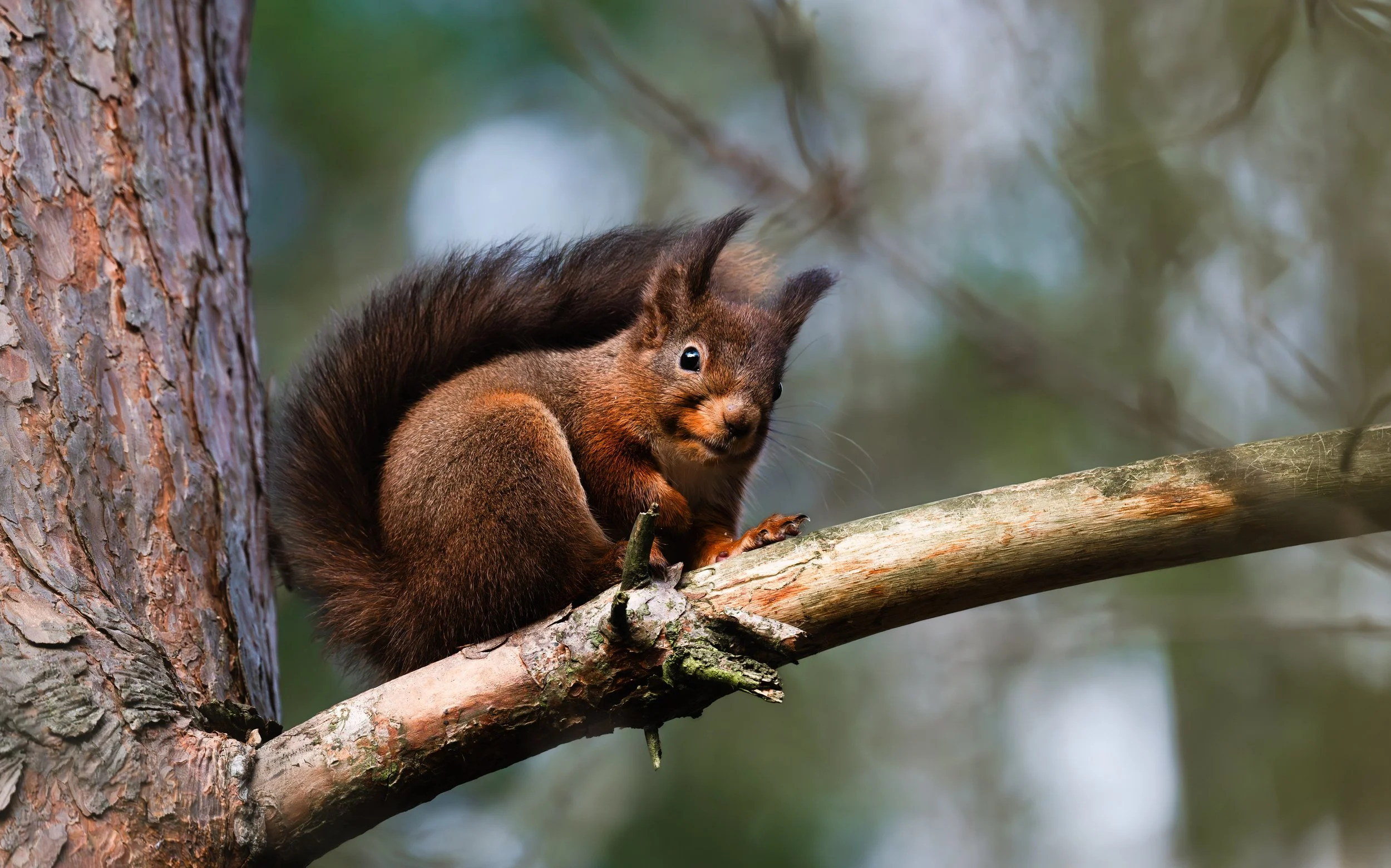
I, for one, adore red squirrels and I have yet to meet anyone who doesn’t. They are a true gem of the countryside, and an indicator of a healthy ecosystem. This is a species we must conserve and cherish, ensuring its legacy as a character of our Northumbrian woodlands for many, many years to come. I hope that one day I can share with my children the wonder and magic of spotting a red squirrel in this beautiful county.
Words and photography by David Dinsley
As featured in This Is Northumberland 2026